

The Cost of Employing a Nanny in the UK: Salary, Tax, Pension and Payroll
Table of Contents
Toggle
By Francesco De Biase | Co-Founder and CEO, Xerendipity
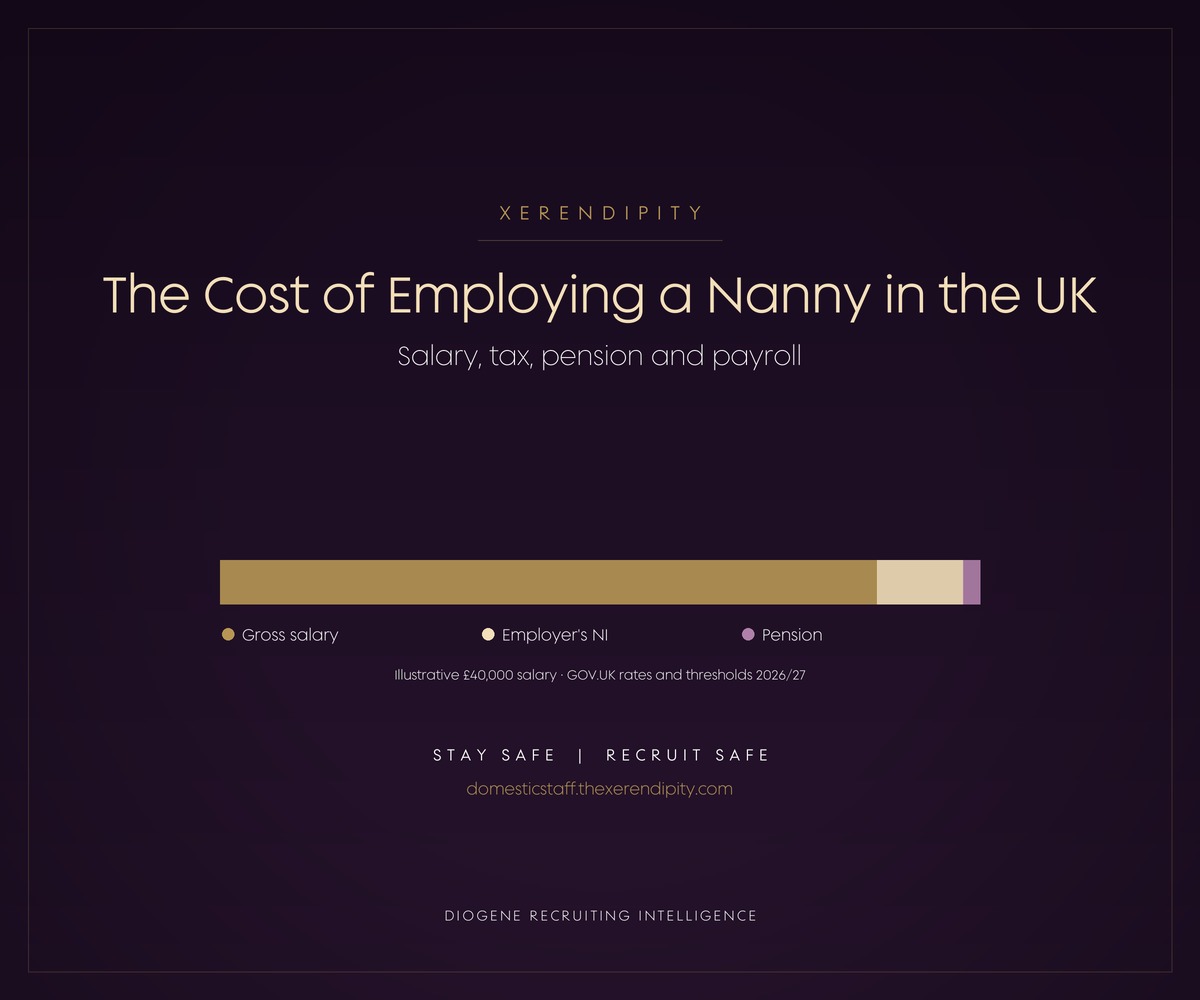
A nanny costs a family more than the salary agreed. On top of the gross wage, an employer in 2026/27 pays National Insurance at 15% on earnings above £5,000 a year, at least 3% of qualifying earnings into a workplace pension, statutory sick pay, holiday and payroll. A household cannot claim the Employment Allowance against any of it.
Last updated: October 2026
The question families ask first is “what should we pay?”. The question that matters more is “what will it cost us?”. The two answers differ by several thousand pounds a year, and the difference is set by law, not by negotiation. When you employ a nanny directly, you become an employer, with the same duties as a small business.
The salary is agreed gross, and should be
The National Living Wage for workers aged 21 and over is £12.71 an hour from 1 April 2026 (£10.85 for those aged 18 to 20). A nanny of the calibre private households look for is paid well above it, but the minimum still matters: it applies to every hour worked.
Agree the salary as a gross figure. Many families still talk to nannies in net terms, a weekly amount in hand. It feels simpler, but it means the family silently absorbs every change in income tax or National Insurance on the nanny’s side. A gross salary, stated in the contract, keeps both parties clear about who pays what.
For a live-in nanny, the accommodation you provide can count towards the minimum wage only up to the accommodation offset, £11.10 a day from April 2026 (GOV.UK, The National Minimum Wage in 2026). Food, travel and other benefits do not count towards it at all.
Employer's National Insurance: 15% above £5,000
For 2026/27 the employer pays Class 1 secondary National Insurance at 15% on earnings above the secondary threshold of £5,000 a year (£96 a week). The nanny pays employee National Insurance at 8% between £12,570 and £50,270, and 2% above, together with income tax under PAYE; the family deducts both from the gross salary and pays them to HMRC (GOV.UK, Rates and thresholds for employers 2026 to 2027).
One point catches many families out. Businesses can reduce their National Insurance bill through the Employment Allowance, worth £10,500 in 2026/27. GOV.UK is explicit that you cannot include someone you employ for personal, household or domestic work, unless they are a care or support worker (GOV.UK, Employment Allowance eligibility). For a nanny, the employer’s National Insurance is paid in full.
The workplace pension: automatic enrolment
A household that employs a nanny has the same automatic enrolment duties as any employer, from the nanny’s first day. If she is aged between 22 and State Pension age and earns more than £10,000 a year, she must be enrolled in a workplace pension. Contributions are calculated on qualifying earnings between £6,240 and £50,270: at least 8% in total, of which at least 3% from the employer. Even with no one to enrol, the employer must write to staff and declare compliance to The Pensions Regulator.
Sick pay, holiday and the rest of the package
Statutory Sick Pay is up to £123.25 a week in 2026/27, or 80% of average weekly earnings if lower. Since April 2026, under the Employment Rights Act 2025, it is payable from the first day of sickness, without the former waiting days or lower earnings limit. Many families offer more through the contract; the statutory amount is the floor.
Holiday is 5.6 weeks a year: 28 days for a nanny working five days a week, which may include bank holidays (GOV.UK, Holiday entitlement). Families who travel often agree in the contract when the nanny’s holiday falls and what happens when the family is away.
The remaining costs are less visible but real: payroll, either run by the family through HMRC’s systems or delegated to a specialist nanny payroll service; and, for a nanny who drives the children, motor insurance that covers that use of the car.
An illustrative calculation
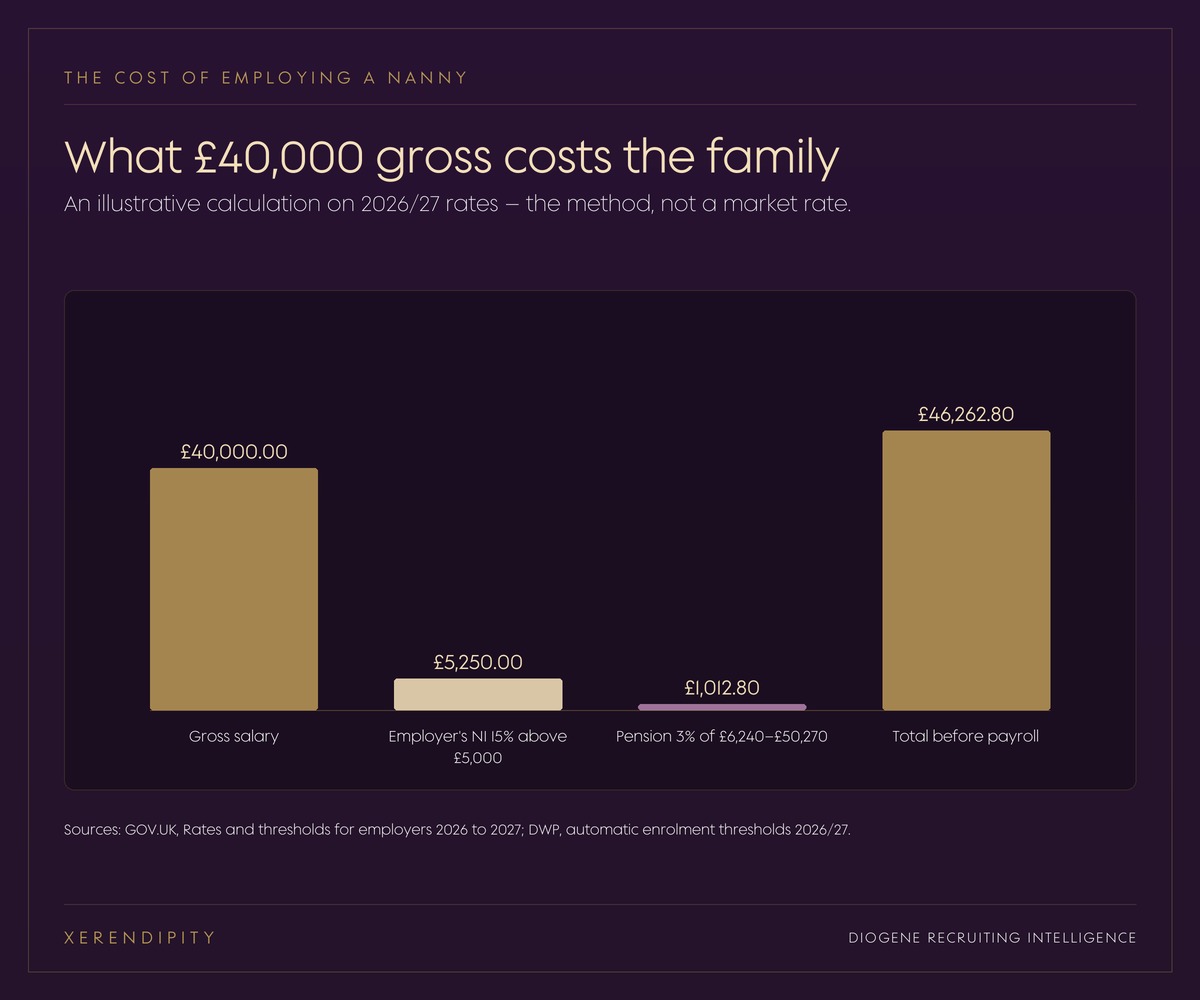
The figures below show the method, not a market rate. Assume a gross annual salary of £40,000, a nanny aged over 22, the minimum pension contribution, and the 2026/27 rates.
| Item | Calculation | Annual cost to the family |
|---|---|---|
| Gross salary | agreed in the contract | £40,000.00 |
| Employer’s National Insurance | 15% × (£40,000 − £5,000) | £5,250.00 |
| Employer pension contribution | 3% × (£40,000 − £6,240) | £1,012.80 |
| Total before payroll and insurance | £46,262.80 |
On these assumptions, every £1 of gross salary costs the family about £1.16 before payroll, insurance and benefits in kind. From the gross salary the family also deducts the nanny’s income tax, her National Insurance and her pension contribution, and pays them on her behalf: they do not add to the cost, but they are the family’s responsibility to get right.
Where the cost of a mistake is higher
The arithmetic is the easy part. The costly part is the wrong appointment: a nanny who leaves after four months means a second recruitment, a second induction, and a household asked to start again with the children. That is why every nanny we present has passed three interviews and four reference checks, and why a Xerendipity nanny placement carries an 18-month guarantee.
Frequently asked questions
Q: How much does it cost to employ a nanny in the UK?
A: The gross salary plus employer’s National Insurance at 15% above £5,000 a year, at least 3% of qualifying earnings into a pension, statutory sick pay, holiday and payroll costs. On a £40,000 salary the first three items alone come to about £46,260 a year.
Q: Can a family claim the Employment Allowance for a nanny?
A: No. GOV.UK excludes people employed for personal, household or domestic work, unless they are a care or support worker.
Q: Do I have to put my nanny in a pension?
A: Yes, if she is aged between 22 and State Pension age and earns more than £10,000 a year. The employer pays at least 3% of qualifying earnings.
Q: Should a nanny’s salary be agreed gross or net?
A: Gross. A net agreement leaves the family to absorb any change in the nanny’s tax or National Insurance.
Rates and thresholds are those for the 2026/27 tax year. This article does not replace advice from a payroll specialist or an accountant on your circumstances.
Further reading: Professional nanny · Recruiting a qualified nanny · The Xerendipity warranty · Housekeeper, head housekeeper or house manager
Sources: GOV.UK, Rates and thresholds for employers 2026 to 2027; GOV.UK, National Living Wage increases to £12.71 per hour; GOV.UK, The National Minimum Wage in 2026 (accommodation offset); GOV.UK, Employment Allowance eligibility; GOV.UK, Holiday entitlement; DWP, Review of the automatic enrolment earnings trigger and qualifying earnings band for 2026/27; The Pensions Regulator, employer guidance; Employment Rights Act 2025 (Statutory Sick Pay changes from April 2026).
Subscribe Newsletter on LinkedIn

Francesco De Biase
STAY SAFE | RECRUIT SAFE
Contattami per Parlare delle Tue Necessità
Francesco De Biase – C.E.O.
Uff. (+39) 02 80888425
STAY SAFE | RECRUIT SAFE
Contattami per Parlare delle Tue Necessità
Francesco De Biase – C.E.O.
Email: clienti@thexerendipity.com
STAY SAFE | RECRUIT SAFE
Contattaci per Candidarti con Xerendipity
E-Mail: selezione-personale@thexerendipity.com